The Letter that Crisscrossed the World

Now and then, I go through boxes of family letters and photos out of guilt, if nothing else, because I’ve never organized them properly. So much history will disappear if I don’t do something, but the task is daunting.
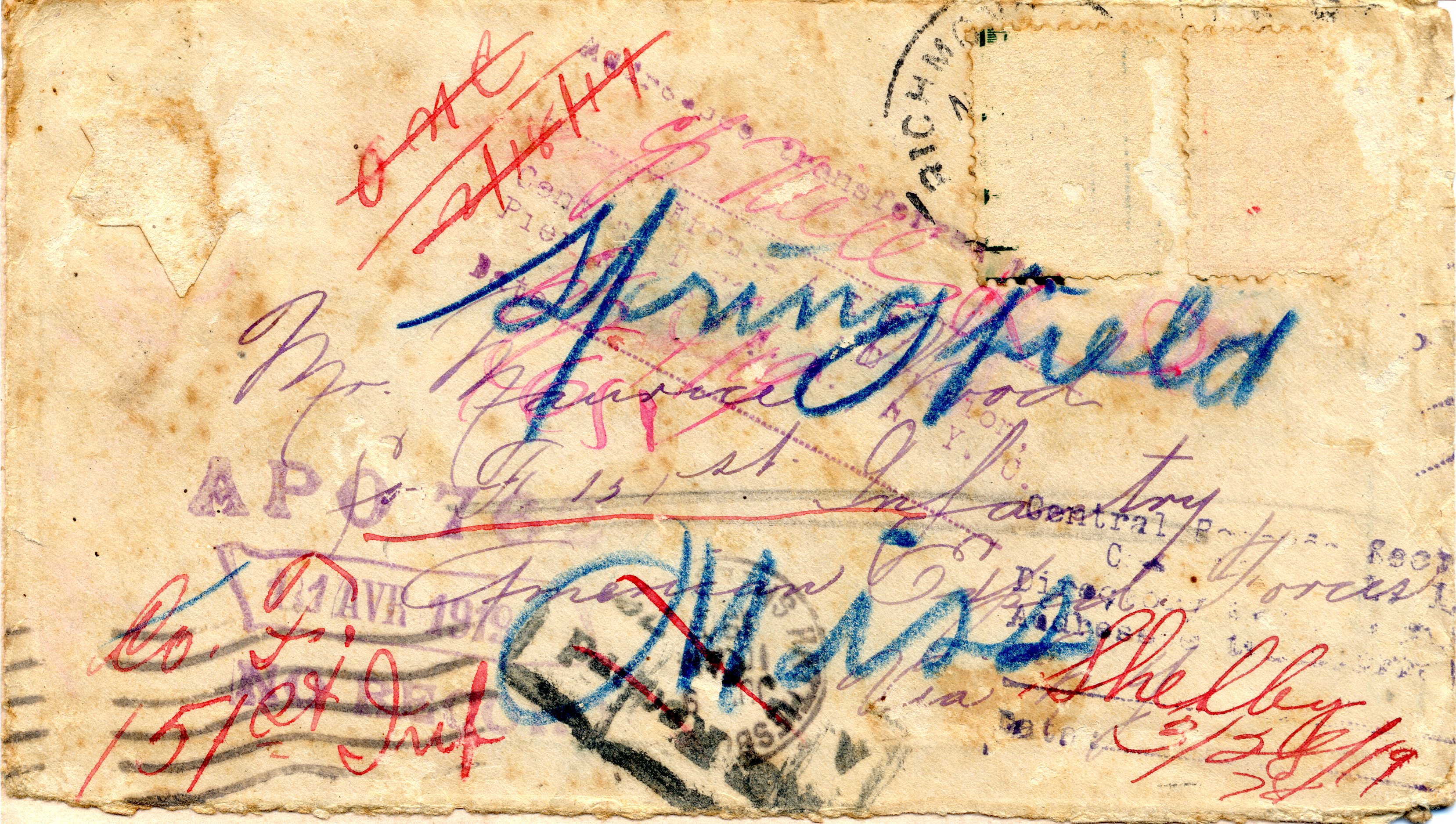
Papaw’s Letter, front

The Letter

The envelope above, crisscrossed with post office cancellations, forwards, dates, and addresses, caught my eye the other day. It tells the story of a letter that followed my grandfather to France and back during the last months of World War I and after. It was not written by my grandmother.

My grandmother always told me that she and my grandfather met at an ice cream social on a Sunday afternoon. She was “engaged” to another young man at the time, but my grandfather came along that day in his doughboy uniform, and when she saw him across the room, she knew. He shipped out for France soon after. I have only empty envelopes addressed to him in my grandmother’s hand; I don’t know what happened to those letters. I do know that his ship, the Agamemnon, arrived back in New York Harbor on March 11, 1919, and they were married May 24, 1919. A two-month courtship!
Emma’s Letter, page 1

One Story, Many Versions

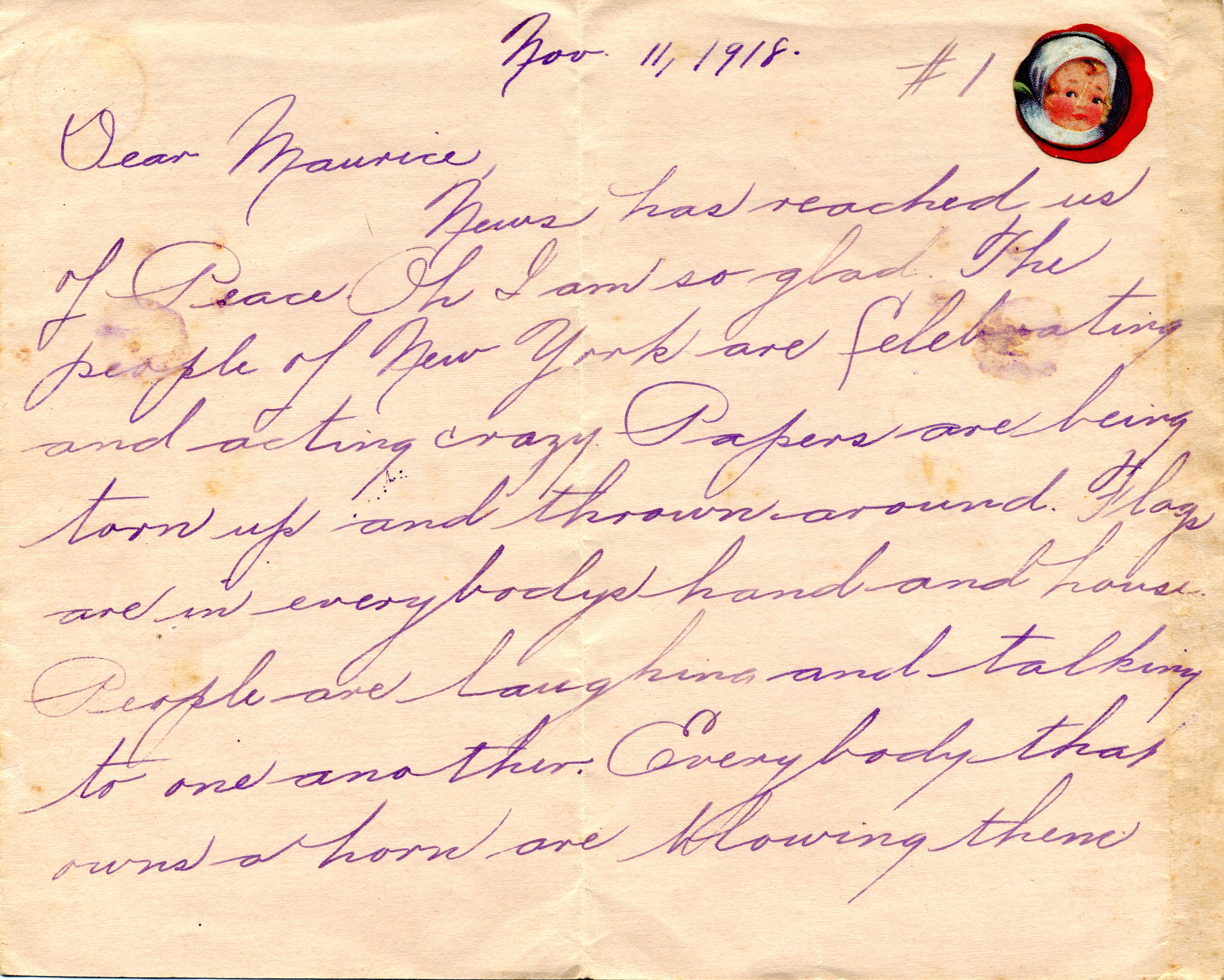
Back to the letter: the writer’s name was Emma Rudolph of Long Island, New York.  Apparently, it was customary for New York families to befriend soldiers caught in the limbo of shipping out or returning home. What must that have been like–a twenty-seven year old man from rural Mississippi in the big city for a few days before he went off to war! He was handsome, blue eyes, blond hair, tall. And from the tone of the letter, I believe Emma was smitten.

I had always believed my grandfather stayed with her family after he returned, but that turns out not to be true. He had met Emma Rudolph before he left for France. In her letter dated November 11, 1918–Armistice Day!–she wrote about celebration in the streets of NYC. “New York is alive,” she wrote. “Our place is closed up for the day. Hurrah for peace . . .” And then she penned these words:

“Write to me, won’t you?”

Her letter went to his APO address and on to Camp Shelby in Mississippi, where he had trained, arriving there March 22, 1919–the same month he arrived back in the States—then on to France, postmarked there [date unclear] Avril 1919. It came back to the States and was forwarded, finally, to “Springfield,” Mississippi. My grandfather’s little community was Springville, not Springfield. The date of its arrival in Springville is illegible. (You’re welcome to turn your computer upside down and try to read it!) Were he and my grandmother married by the time he got that letter? Did he ever write to Emma? Did she ever know he was safe, or that her little letter had followed him across the Atlantic and back? (The photos here are a bit larger than its actual size.)
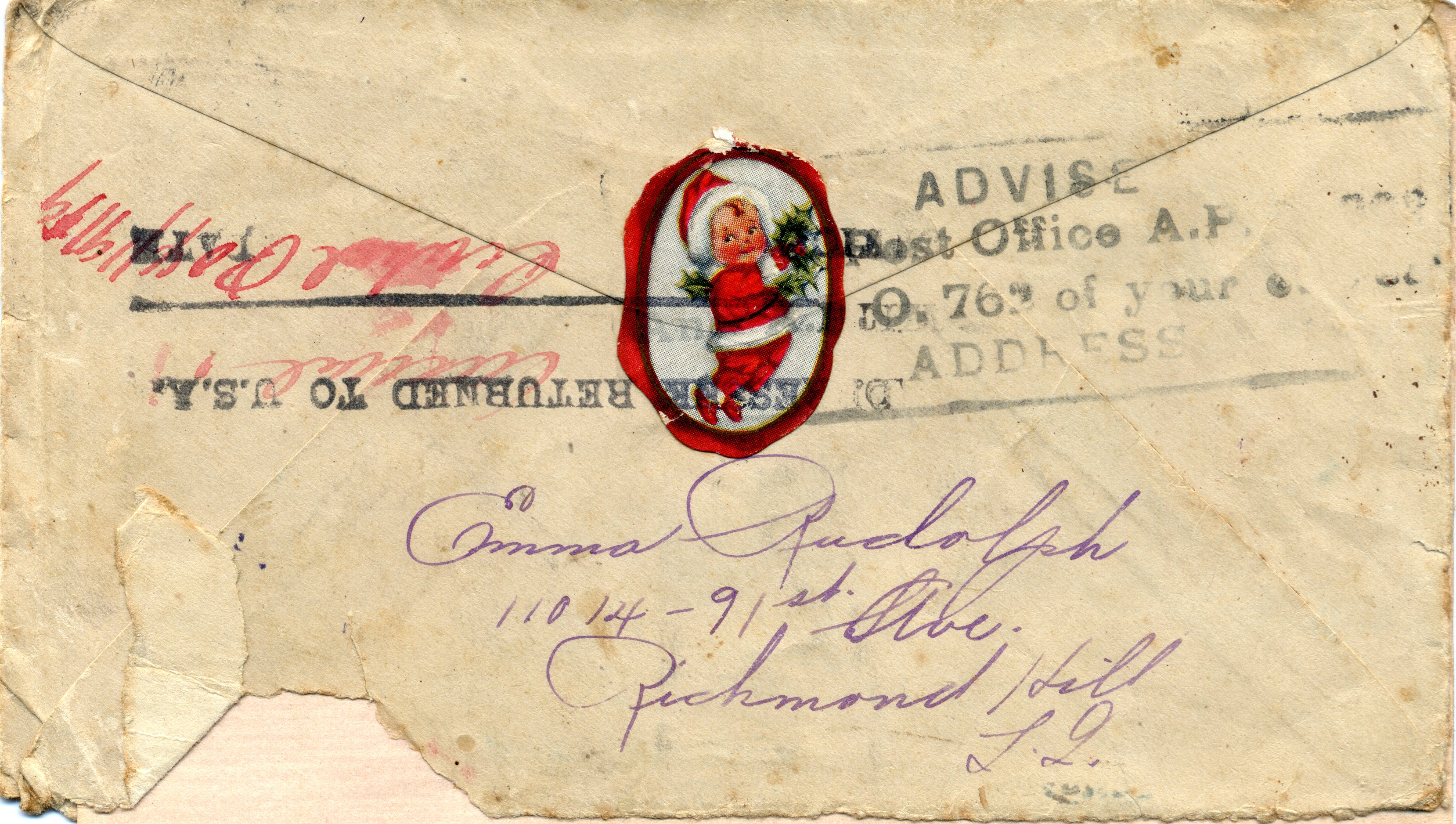
Papaw’s Letter, back

What If?

So many what if’s–the makings of a good story. What if he had fallen in love with Emma of Long Island, New York? What if the letter had reached him and he had stopped off to see her on his way home? What happened to her? She says in her letter that she hasn’t heard anything from him since he went away, but the letter has a pleading tone: “If when you come back you are in a camp near enough to come and see me, you are welcome.”

Strange turns of fate, that bring us, and our stories, into being!

Letters–never sent or gone astray–play an important role in my WIP, Spirit Lamp, a work of historical fiction set during World War I. Thank you, Emma Rudolph, whoever you were. And thanks to my maternal grandparents, too. If you hadn’t gotten together . . .

Have family artifacts or stories informed your writing? If so, how? Tell me about it!
Looking Back, Looking Ahead

A Little Housekeeping

It’s time for some updating and housekeeping chores at The Writerly Life.

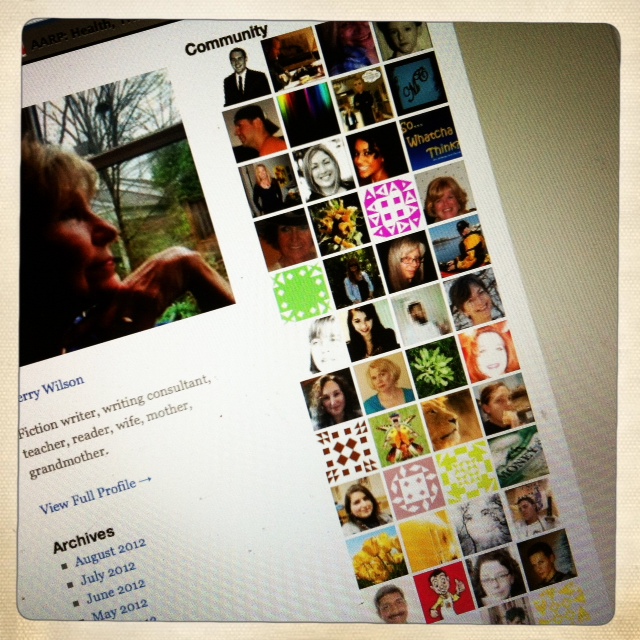
Screenshot # 2

The home page has a slightly different look today: I moved some things around, got rid of the Tag Cloud (which seems to duplicate Categories, but maybe I’ll just start afresh), added a quick-access profile via Gravatar, and most importantly, a new widget called Community that shows all of you likers, followers, and commenters. It’s colorful and cheery and reminds me of why I’m here. It’s not a host of hundreds yet–but it’s growing!

Overall, I hope the effect is cleaner and more efficient. You can let me know what you think.

This little makeover calls for a big shout-out to all of you who have read these words and maybe even honored this effort by making The Writerly Life a regular stop on your blog rounds. That takes time and effort. Thank you, thank you!

Milestones

Some milestones reached this week—over 5,000 views and 65 posts, including an interview and some fine guest writers (all almost entirely since April 2012)—call for a hard look at the blog, where it is, and where it’s going.

I am not a prolific writer here. Some of you put me to shame, posting every day! I will continue to write regularly, bringing you something original (I hope!) once a week and also sharing other sites that strike me as interesting and informative (like this one), words of wisdom regarding writing and the writer’s life, and photographs, including a regular series of photos as writing prompts. Look for a special guest post next week and another writing prompt coming soon (it’s a provocative photo; I think you’ll like it)! Occasionally, I’ll dare to drop in bits of original fiction or poetry.

And who knows what else, because this writer’s house is a work in progress.

“Y’all Come Back Now . . .”

I hope I’ll continue to offer you words and images that are worth your time. So, as one of my elderly aunts used to say every time my family left her house on a Sunday afternoon, “Y’all come back now, ya hear?”

 If you’re new here, follow the links in this post for a taste of what The Writerly Life is like. I’m always glad to see you here and read what you have to say.

So Many Streets, So Many Connections

Photograph of Virginia Woolf , 1911 – 1912. Oil on board, by Vanessa Bell. In the public domain.

I have lost friends, some by death… others by sheer inability to cross the street. 
 Virginia Woolf

I just finished reading an essay, “Girlfriends,” in Anna Quindlen’s Lots of Candles, Plenty of Cake. In her memoir Quindlen passes along Virginia Woolf’s wise words, above. Those words struck me hard. For, you see, I am at an age where I have lost friends to death, although you might say age has nothing to do with it, and that’s true. Friends, or God forbid, family, can be snatched from us at any age, at any time; witness the recent unspeakable event in Aurora, Colorado.

How Wide Is the Street?

Having gotten those morbid thoughts out of the way, I’d rather focus on the other part of Woolf’s quote. We lose friends, Woolf suggests, “by sheer inability to cross the street.” Those words stunned me. How many times have I let friendships languish out of inertia? How often have I been unable, or unwilling, to “cross the street”?

I thought immediately of a good friend–we used to be “besties,” as the young ones might say–whom I haven’t seen in months. We haven’t even talked on the phone or emailed. I’m mystified by this neglect of a long-time friendship. I’m afraid we’ve drifted away from each other because of political and religious differences, and there’s no way one of us can convince the other she’s wrong. Even though we have “agreed to disagree,” those differences have cast a pall on our friendship. And yet, why have I not crossed the street, called one more time, and suggested we get together? I have not, and it’s a shame.

Then there’s my dearest childhood friend who writes me long, lovely, handwritten letters occasionally, newsy notes about her and her husband and what’s going on in their lives.  When we do talk, maybe once a year (why not more often?), we always pick up where we left off, as though not one of the events of our later lives has intervened. We might as well be girls again, sleeping over and giggling–or crying–about boyfriends. That’s a rare friendship indeed. My response to those long letters she writes? She’s lucky if she gets an email in return. She deserves a better friend.

And there are the friends in my book group (we call it “the bookgroup,” as in the only one). Some of us “go way back”; others are relatively new friends with whom I share a great love of books. We don’t always agree; in fact, we have spirited discussions when we meet. But we respect each other. I think it’s safe to say we love each other. We would cross the street; indeed, we have. (One of those friends shared the Quindlen essay with me. Thanks, J—.)

Coffee cup

A Whole New World

And then there’s the new world of cyber-friends. Friends, you say? Are you skeptical? That’s all right. I was, too, in the beginning. Yes, I use Facebook to keep up with my dear ones. Otherwise, Facebook “relationships” seem superficial, at best. And yet, if you’re lucky, a comaraderie develops over time as acquaintances open to each other through common interests; as they sense when someone needs a good word; as they listen (figuratively, yes); as they offer themselves unselfishly, laugh together, and cry together.

This is particularly true of writers, I think. I’ve become associated with a group of writers  through Facebook and other social media. We may have started out with the goal of increasing our online presence and creating a “platform” so that as we publish and hopefully, someday, really need a platform, we’ll be ready with the website and the Facebook Writer’s Page and a Twitter account and a nice number of connections across the Web. But I believe, as we’ve gotten to know each other better, bonds have formed among us. We don’t all know each other equally well; we don’t all share the same goals; we might not recognize each other if we were all thrown into a crowded room together. But we are connected. What we care about—our writing, mostly, but also our successes, our failures, our significant life moments, both good and bad—we have come to expect to share with these other folks whom we may never see in the flesh.

Let’s Have a Cup of Coffee

Yet we are, in a real sense, capable of “crossing the street” for each other. It’s not the same as sitting across from that old friend I miss a lot, having a cup of coffee, and catching up, or writing that long overdue letter, or having a pithy book discussion that ends in good will and laughter. It’s not the same as showing up at the home of a friend when somebody is sick or there’s terrible news.

But give us time and technology! We may just get there.

How important are your friendships, “in the flesh” or otherwise? Let me know your thoughts!