When Life Gets in the Way

The first week of June, on the fourth day of a beach vacation in Fort Morgan, Alabama, my husband and I walked down to the beach after dinner to watch the sun set. My son’s family was there; it’s become a tradition to gather at the beach with them every summer. That evening, I walked out of our shade tent to take a look at the sand castle my grandson was building, stepped in a hole in the sand, and went down. Hard.

From that point I remember only bits and pieces—a blessing, I’ve been told—but I do remember the EMTs putting me on a backboard they had trouble latching in the sand and loading me into the bed of a red pickup truck with “RESCUE” emblazoned on the doors (the ambulance couldn’t navigate the beach). I remember the guy in the back of the truck with me yelling “Go go go!”, urging the driver on over the rough terrain.
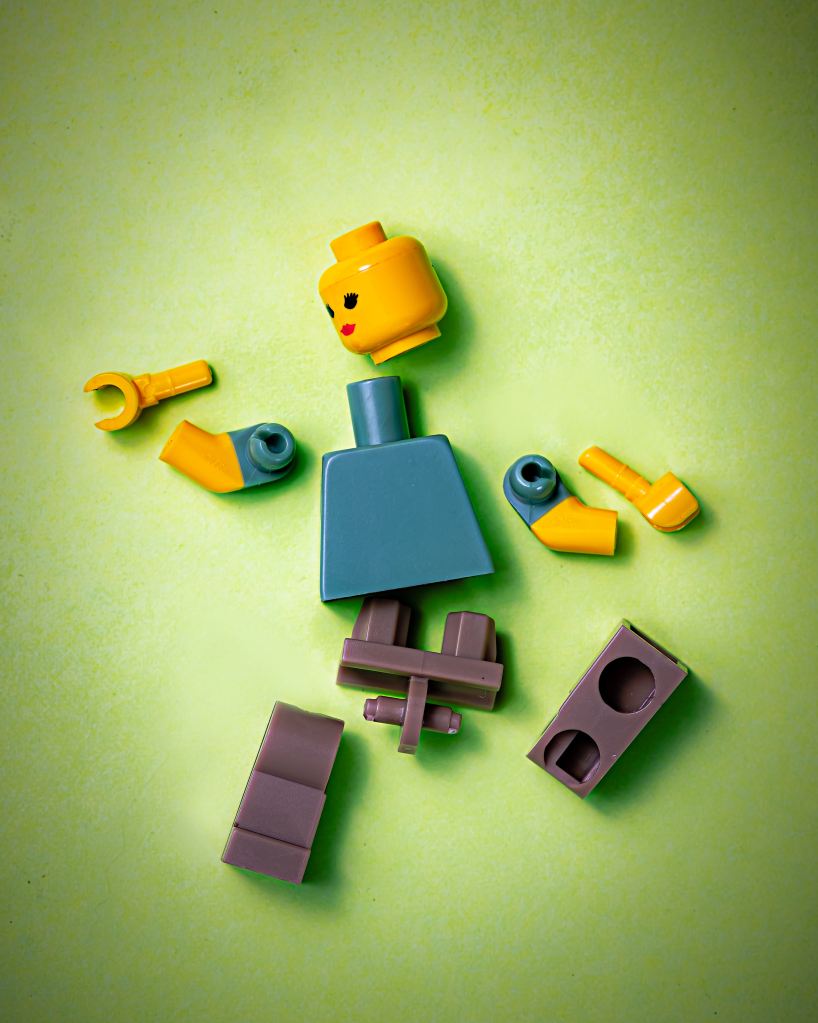
I had surgery in Foley, Alabama, and my husband and son drove me home to Jackson, Mississippi a few days later. I spent three weeks in a rehab facility. I’m now almost four months out from the fall and the surgery and doing well.

But what about the time I “lost” to a fog of pain and meds and physical therapy and learning to function again? If you’ve had a similar experience, you know that getting well becomes all-consuming. The momentum I’d had before the accident—preparing to launch my novel, starting a Substack newsletter, expanding my social media presence, and more—was gone.

This is where the old saw, “life gets in the way,” comes in. After something that shakes us, how do we reclaim our momentum? How do we rebuild confidence? How do we pick up where we left off—or even better, how do we take the earth-shattering experience and create something good and maybe even beautiful from it?

I don’t have many answers, but I will say this: like regaining strength, we get back a little bit at a time. We allow whatever emotions we have to play out. I’ve cried plenty over those lost days, but that won’t bring them back. I’ve begun to write again (this little essay is part of that effort). I’ve gotten back to revising stories for a collection. There’s a 40,000-word draft of a sequel to my forthcoming novel, That Pinson Girl, nagging me for attention. I haven’t written anything new yet, but I hope that will come, in time. Time’s the great healer, people keep telling me. I hope so!

What about you? Has life thrown you a curve ball lately? How did you adapt? What tips do you have to offer? I would love to hear from you in the comments.

Photo by Jackson Simmer on Unsplash

This piece was originally published at Story Circle Network, October 4, 2023.
Tough Story Love: How to Give It

How do we offer honest, valuable feedback to someone else’s precious, creative work? How do we respond to another person’s writing without a) simply patting the writer on the back and praising the piece, or b) going so negative that the writer wants to rip the story up and never write again? One way is through “reading and responding” to each other’s work. I prefer that phrase to critique; critique sounds so clinical.

I witnessed the worst-case scenario at a prestigious writers’ conference once, where a young workshop participant was so crushed by the craggy, legendary poet’s critique that she packed up and went home. Too sensitive, you say? Maybe. But I believe any criticism that isn’t delivered with integrity and compassion isn’t worth its salt.

Photo by Evelyn Clement on Unsplash

I learned this lesson the hard way: I taught creative writing to high school students for more than twenty years. Talk about potential for disaster—a room full of teenagers let loose to “critique” each other’s writing! I developed guidelines that work for adults, too.

Many of you are already practiced readers and could offer a tip or two of your own—I hope you will, in the comments—but for those who might not be as familiar with the critique process, here are a few suggestions. None are original to me but common practices I’ve encountered in successful groups.

  • Read the piece once without pondering too much. Then read it closely, paying attention to what works and what doesn’t. Consider the elements of craft (I’m focusing on fiction)—plot, characterization, language, setting, opening/ending, etc.—particularly anything the writer has expressed concern about.
  • Always, always start by identifying something the writer has done well! No generalizations allowed: no “I really liked it” or “Great job!” Those statements may be true, but they don’t help the writer in concrete ways. Say specifically what you believe worked well: “The dialogue sounds real; I could hear those characters speaking.” “I was intrigued by the plot turn when . . .” “Your setting details establish the mood of the story.”
  • Make specific constructive comments. Notice I said constructive, not critical, which means the comments will be useful. Try couching your negatives as questions or “I” statements: “Could you clarify what happens here?” instead of “That’s so confusing.” Or “I didn’t understand when . . .” instead of “You sure lost me!”

Some of you may consider this approach too “touchy-feely.” I’m not saying we can’t offer tough love for a story. We can and should. If all we want is vapid praise, we probably aren’t serious about writing, and we aren’t willing to do the necessary work. Being a good reader requires skill, hard work, and thoughtfulness. It’s a gift we offer to each other.

Remember: as a reader of someone else’s priceless work, be respectful, be honest, be specific, and be constructive! 

Let’s talk. Leave a reader tip in the comments to add to the above. I’d love to hear from you!

A Picture’s Worth . . . How Many Words? # 2

Here’s the second photo in the series that began a couple of weeks ago:  A Picture’s Worth  . . . How Many Words? (Click on the link to see the first one.)

The point? A prompt that’s the opposite of a photo challenge. Instead of finding or shooting a photo to suit the word/s, you bring the words to the photo.

Maybe it’ll trigger a memory or  prompt a story or poem.  The possibilities are as limitless as your imagination!

So jump in . . . Write about what’s happening in the picture. Write what came before. Write what comes after. Take it anywhere you like . . .

I would love to see what you do! Post your first 100 words or a few lines of a poem in a comment. Or share a link to a longer piece.

Happy writing!

[The photo has a title, but I’m not going to give it to you!]
http://www.istockphoto.com / photo by CREATISTA