Wordle 65: A Little Fiction

Here are this week’s words at The Sunday Whirl. Wordle 65 made for quite a challenge, especially one of the words. I bet you can guess which one:

flicks, swells, spray, grittle, gravity, plant, trigger, relishes, chain, crack, humility, refrain, claim

Here’s the result of my playing with these words–a bit of fiction:

Seven Letters, Starts with G

“What’s a seven-letter word, starts with gr, has an l second letter from the end?”

Lori ticked off letters on her fingers. “Grabble? Grapple?”

Harry tried them. “Nah. I don’t think so. Doesn’t work with 13 down. That’s r-a-p-t. Rapt.”

Lori scribbled a few words. “How about griddle?”

Harry chewed the end of his pen. She hated it when he did that.

“If rapt is right, then there’s a t where one of the d’s would be. Gritdle? Gratble?” He shook his head. “You’re no help.”

She flicked the dish towel at him.

“Ow,” he said. “Refrain from the abuse, would you please?” He grinned, and she aimed a pretend gun at him and pulled the trigger.

Pow. See? Rhymes with ow.”

“Ha,” Harry said.

She was finishing up in the kitchen, but he hadn’t yet left the table. He was like a crack addict when it came to his crossword puzzles. First thing every morning while he ate his breakfast. The easy puzzle first, then the syndicated New York Times puzzle edited by Will Shortz. All while she showered and dressed and slugged down coffee and grabbed a Pop Tart before she left the house at seven to go process claims at FiveStates Insurance Company in downtown Ithaca. She hated that job. A computer programmer, Harry worked from home these days. She wasn’t sure what he did exactly. Maybe he worked puzzles during the day, too, but then after dinner, he was back at it.

She wasn’t going to be stuck at FSIC forever. She was writing at night, or before Harry got up, sometimes as early as four in the morning. It was her true work, her calling, the dark, romantic fantasy with a heroine who sprayed diamonds from her fingertips like bullets and whose breasts, Lori had just written a couple of days ago, were like “the swells of waves in a high sea.” She relished those words. She relished that time when she didn’t feel chained to a desk. Chained to Harry.

She shook her head. Had she just thought that? Yes, she had.

She was almost done in the kitchen now. She nested the clean casserole dish inside another, but it slipped and bounced out of her hands and shattered on the tile floor.

Harry dropped his pen. “Good God, Lori! Can’t you be careful?”

“It’s called gravity, Harry. It slipped. It fell.” Her heart pounded. She was close to tears. He’d gone back to his puzzle. Damn you, she thought. She picked up the biggest pieces and dropped them in the trashcan. Then she got the broom and dustpan out of the closet and started sweeping up the glass. She got a sliver under her fingernail.

“Ouch! Oooh!” She was crying now.

“Hey,” Harry said. He got up from the table. “Let me help.”

“I’m done. I don’t need your help. I don’t need you. Why don’t you take your damn puzzles and leave?”

“Leave?” Harry looked stunned. “Uh uh. I don’t think so. You think you could make it without me? I saw that, that novel, or whatever it is you’re writing. I read it. It’s awful.” He took the dustpan from her and dumped it. The broken glass made a kind of pleasant sound going in the trash, a little like a wind chime. I could use that in the book, she thought. A nice detail.

“It’s good, Harry. I know it’s good. I think I can sell it.”

He put the dustpan away. She was still standing there with the broom and her bloody finger. He handed her a tissue. “I’ll say one thing. Humility’s not your strong suit, is it?”

She slammed the broom into the rack inside the pantry. She grabbed her coat off a chair and her keys off the table.

“Where you going?”

Lori planted her feet, squared her shoulders. “Out.” She opened the door, but then she stopped and turned to look at him. “It’s grittle,” she said.

“It’s what?”

“Grittle. The word you couldn’t get.”

He laughed. “Never heard of it. You’re making that up.”

“No I’m not. It means something like a coarse grind, or what you get after a coarse grinding. What’s left. The nitty-gritty, Harry. Go look it up.”

And she was out the door.

Count No-Count, Mr. Bill, Pappy . . .

Bookshelf

Today marks the fiftieth anniversary of William Faulkner‘s death on July 6, 1962. So why, you may ask, would I write about an author who’s been dead for fifty years?

Here’s why:

I grew up thirty miles from Oxford, Mississippi, practically in Mr. Faulkner’s shadow. I vaguely remember the hoopla when Intruder in the Dust was filmed there (that’s a very early memory, mind you). The locals didn’t think much of him; they called him “Count No-Count,” apparently a reference to his laziness. His views, not to mention his often difficult, convoluted prose, didn’t cut it with the home folks back then.

Maturity Required

In college, I was forced to read Faulkner. Not until I was in my forties did I decide to have another go at his novels. One summer, I read The Sound and the Fury, Absalom, Absalom!, Sanctuary, and Light in August in quick succession. Once I immersed myself in the language and the rhythm of the prose, it became less difficult, even mesmerizing. If you’re not a Faulkner fan, I know I probably won’t convince you to take him on. All I’m saying is that it took a certain maturity on my part, both in terms of life experience and as a reader, to appreciate him.

Later, I wound up teaching The Unvanquished and As I Lay Dying to high school students (I struggled to get As I Lay Dying on the reading list–too hard, other teachers said). Many of the kids responded well to a close reading of those books. There’s also an element of pride, I would tell them; Mississippi may be last in a lot of things, but we’ve produced some fine writers, and William Faulkner is arguably among the best. Ever. Anywhere.

Bring On Mr. Bill!

If you’ve never read Faulkner, think about taking him on. The Unvanquished is a portrayal of life (on the Southern side) during the Civil War. It’s an easy read compared to most of his other books, but it’s not “typical” Faulkner in terms of style. Try As I Lay Dying, which is a manageable read and a remarkable book. Then work your way up–maybe Light in August or Absalom, Absalom! Tackle Sanctuary (possibly his most controversial work), or The Sound and the Fury; its first section is written in the consciousness of Benjy, a grown man with the mind of a child who has no perception of chronological time. Someone–I don’t remember who–recommends you read the rest of the book first; then go back and read the Benjy section, and it’ll be more accessible.

There are many others. These are just my favorites.

If you’re not up for tackling a novel, start with a short story: “That Evening Sun” or “A Rose for Emily” or “Barn Burning.” But whatever you do, read some of Mr. Bill’s work, especially if you never have. (You can find the full text of these stories online.)

Faulkner = Home

William Faulkner. [Map of Yoknapatawpha County] from The Portable Faulkner (New York: The Viking Press, 1946).

Maybe I relate to Mr. Bill’s work because it resonates of home. I recognize Yoknapatawpha County, those hills, that hard red earth, the people. Not everybody has those ties, but you don’t really need them. Faulkner’s work has withstood the test of time for a reason. Go there. You’ll recognize someone.

Here’s a recent article you might find interesting: How William Faulkner Tackled Race — and Freed the South From Itself. And if you’re curious about the man, go to William Faulkner: Frequently Asked Questions.

I’m well aware that people tend either to love or hate Faulkner! Where are you on that continuum? What have you read? 

Wordle 63: July 1

Today’s Wordle 63 at The Sunday Whirl:

skin, lips, thin, snapshots, touch, other, act, hanging, gesture, stand, sent, utter

The result? A bit of flash fiction:  

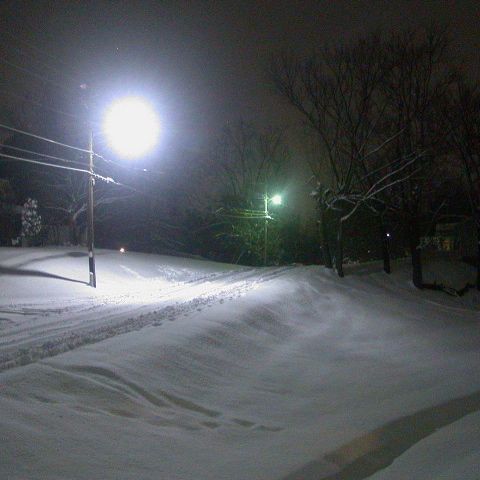
light on snow — photo by Clay Jones

He stands silhouetted in the doorway, the light behind him, his hand on the frame as though it bears him up. His lips are drawn in a thin line, the words he’s just uttered hanging heavy now in the space between him and the woman.

He tells himself what he’s done is an act of mercy. He’s cut her loose, sent her away. She cried, but she’ll get over it. Some other guy will spot her in a bar or an elevator or on the subway and know she’s what he wants, and in a week or two or maybe a month, she won’t be so angry. But she won’t forget.

She crosses the parking lot and doesn’t look back, and in that light, her skin is the color of pale in faded snapshots. He has to admit she’s a class act, better than he deserved.

What will he remember? Her last gesture, how she touched his cheek, just barely, like a whisper. He imagines her still standing there, her breath suspended in the air like frost.