Walking through Fires

Meet Leona Pinson — “that girl” in That Pinson Girl, my debut novel — who at seventeen gives birth to an illegitimate child. Leona has completed the eighth grade, the only education available to her deep in the beautiful but hardscrabble hills of north Mississippi. Leona lives on a farm with her troubled mother, Rose, her aunt, Sally Pinson (a dwarf whose appearance has always frightened Leona), and her older brother, Raymond, who drinks and rides at night with other young men who feature themselves the “new” Klan. The year before her child is born, Leona’s father died in a hunting accident she believes may have been murder.

Leona is smart and resourceful, but vulnerable. Lying with that boy before he goes off to the war in France and refusing to name him as her son’s father invite the scorn of her family and the community, except for Luther Biggs, a biracial sharecropper who has a long history with the Pinson family. Luther loves and protects Leona, but he too keeps a devastating secret.
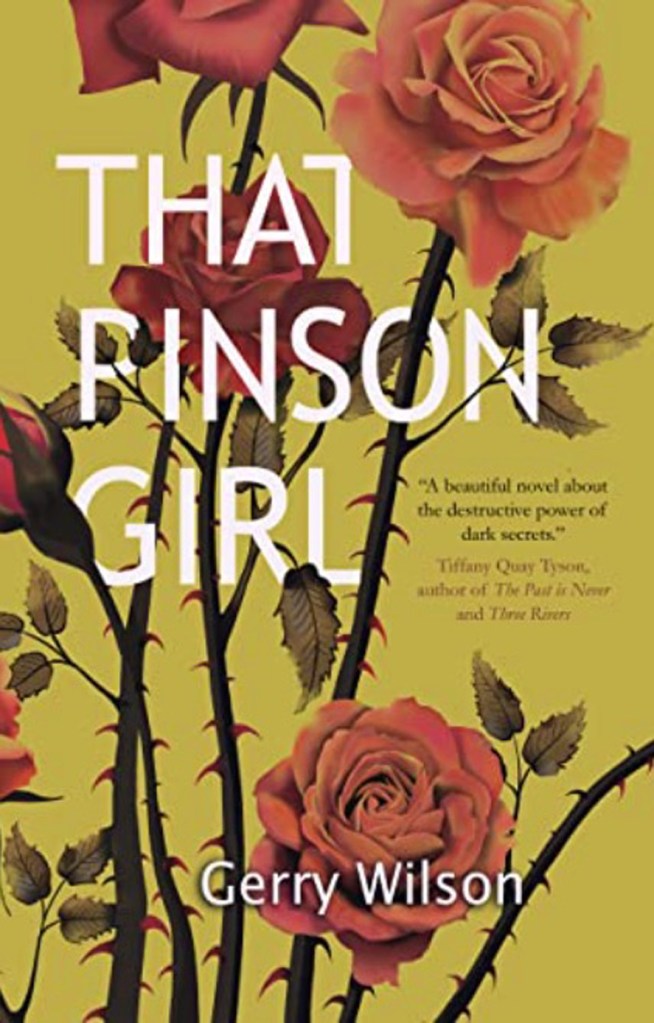
Pre-order That Pinson Girl from your favorite book store.

Early on, the problematic side of Leona as a character seemed to be that she was a victim of her life circumstances. Nobody wants a passive main character! But as she developed over the course of re-writing the novel many times, I discovered she wasn’t a victim at all, subject to the whims of others and whatever Fate might have in store. She evolved, and eventually, I found depth and resilience and courage in her that surprised me. You see, when Leona encounters hardships — when she walks through the fires of discrimination, hatred, violence, and loss — she suffers, but she picks herself up and gets on with the life she knows, all the while yearning for something better, all the while becoming stronger.

Where does the character of Leona come from?

In part, at least, she comes from me. My own life is probably my deepest source, whether I’m aware of its influences when I’m writing or not. Leona also comes from stories my maternal grandmother told. Her early life was a textbook for living with hardship and loss.

But Leona also comes from this:

When I was a child, a woman lived with her son and her mother in a shabby house down the street from us. It seemed nobody ever visited or called or spoke to them. They went about their lives in isolation. When I asked my parents about them, I got non-answers. I was almost grown when I learned she had borne the son out of wedlock when she was just a girl, and all of them were shunned because of it.

And there you have it: the birth of Leona Pinson as a character. I’m grateful to know her and share her with you.

#

A different version of this piece appeared September 8, 2023, on Substack at Stories I’m Old Enough to Tell. I’m in the process of transitioning this website blog to Substack. I would love it if you would subscribe there (it’s free!) and share with friends.

On Substack . . .

Hello, friends.

There’s a new edition of my Substack newsletter, “Stories I’m Old Enough to Tell.” This one, “Walking through Fires,” introduces you to Leona Pinson, the main character in That Pinson Girl (forthcoming February 6, 2024).

I hope you’ll go over and read—OR listen! I’ve introduced audio on this post and loved doing it, although I do sound really Southern!

Open the Doors. Walk Right In!

We talked recently about the importance of ridding a story of whatever isn’t absolutely necessary and/or doesn’t advance the story. This “excess” can be anything from losing a line of description to cutting out a character. Or a scene. In the case of novels, entire chapters.

But once we’ve reduced a story to its bare bones, what’s next?

We look for opportunities.

A few years ago, in a fiction workshop at The Lighthouse Lit Fest in Denver, I had the opportunity to sit down with an author I admired to talk about the opening pages of my novel. That hour was golden, but it was also hard. What I’d thought was a pretty good start had lots of growing to do.

Image: Jan Tenneberg, Unsplash

Most of his comments—scrawled in the margins beside a line or two of underlined text—said simply “Open this door.” He talked about being alert to a range of possibilities to go deeper into a character’s psyche, to make description more visual and significant to the story, to open up the plot in a different direction.  

How was it he could see those things when I had not? I’ve decided it’s a skill that comes with practice.

As you read through a draft (preferably aloud), be open to possibilities. Be aware of anything that needles you, of passages that feel somehow incomplete or “off,” of words or phrases that nag you. In my experience, sometimes there’s only a vague uneasiness; I can’t say right away “what’s wrong.” It can feel so urgent to “finish” and get a story out into the world that it’s easy to ignore these signs. Chances are, they won’t go away on their own. And the story won’t fix itself.

Here’s an example of what I mean by opening doors, taken from a story I’m still working on, “Fast”:

Paul witnessed his father’s hard life as the pastor of two, sometimes three rural churches at a time. His shortest tenure while Paul was growing up was two years, the longest ten; a cycle that repeated throughout his father’s life.

Became this:

Whenever someone asks how he came to be a minister, Paul likes to say he was called. It’s what his father said, and Paul believed it. Why else would a man choose to serve two, sometimes three poor, rural congregations at once, moving every few years to a different set of churches, a different set of people and problems? Paul witnessed the toll it took—never enough energy or time to go around, never enough money. Paul was eighteen and about to leave for college when his father told him he had one piece of advice. He swept his arm around the shabby office in one of those rural churches. “Whatever you do, don’t do this,” he said.

What’s the difference—beyond more words?

What works for you when it comes to “fleshing out” stories? I would love to see your comments.

[This post originally appeared at Story Circle Network, February 10, 2023.]