Tough Story Love: How to Give It

How do we offer honest, valuable feedback to someone else’s precious, creative work? How do we respond to another person’s writing without a) simply patting the writer on the back and praising the piece, or b) going so negative that the writer wants to rip the story up and never write again? One way is through “reading and responding” to each other’s work. I prefer that phrase to critique; critique sounds so clinical.

I witnessed the worst-case scenario at a prestigious writers’ conference once, where a young workshop participant was so crushed by the craggy, legendary poet’s critique that she packed up and went home. Too sensitive, you say? Maybe. But I believe any criticism that isn’t delivered with integrity and compassion isn’t worth its salt.
Photo by Evelyn Clement on Unsplash

I learned this lesson the hard way: I taught creative writing to high school students for more than twenty years. Talk about potential for disaster—a room full of teenagers let loose to “critique” each other’s writing! I developed guidelines that work for adults, too.

Many of you are already practiced readers and could offer a tip or two of your own—I hope you will, in the comments—but for those who might not be as familiar with the critique process, here are a few suggestions. None are original to me but common practices I’ve encountered in successful groups.

  • Read the piece once without pondering too much. Then read it closely, paying attention to what works and what doesn’t. Consider the elements of craft (I’m focusing on fiction)—plot, characterization, language, setting, opening/ending, etc.—particularly anything the writer has expressed concern about.
  • Always, always start by identifying something the writer has done well! No generalizations allowed: no “I really liked it” or “Great job!” Those statements may be true, but they don’t help the writer in concrete ways. Say specifically what you believe worked well: “The dialogue sounds real; I could hear those characters speaking.” “I was intrigued by the plot turn when . . .” “Your setting details establish the mood of the story.”
  • Make specific constructive comments. Notice I said constructive, not critical, which means the comments will be useful. Try couching your negatives as questions or “I” statements: “Could you clarify what happens here?” instead of “That’s so confusing.” Or “I didn’t understand when . . .” instead of “You sure lost me!”

Some of you may consider this approach too “touchy-feely.” I’m not saying we can’t offer tough love for a story. We can and should. If all we want is vapid praise, we probably aren’t serious about writing, and we aren’t willing to do the necessary work. Being a good reader requires skill, hard work, and thoughtfulness. It’s a gift we offer to each other.

Remember: as a reader of someone else’s priceless work, be respectful, be honest, be specific, and be constructive! 

Let’s talk. Leave a reader tip in the comments to add to the above. I’d love to hear from you!

Read It and Weep (Not)

I’ve been thinking about critiques—how to give and receive them. An online group I belong to, an offshoot of the My Name Is Not Bob Platform Challenge (April 2012), has bonded as an active, online community, and now we’re looking for ways we might support each other. One way is through “reading and responding” to each other’s work. I actually prefer that term to critique; critique sounds so clinical.

So how do we offer honest, valuable feedback? How do we go about responding to someone else’s writing without falsely patting the writer on the back and praising the work—without offering anything substantial that might help the writer improve the piece—or going to the opposite extreme with a “slash and burn” technique that leaves the writer in ruins and makes her want to rip the story up—literally—and never write again? I exaggerate, but you get my point.

If You Can’t Stand the Heat

I actually witnessed the latter once at a prestigious writers’ conference where someone I knew was so crushed by the critique of her poems by a craggy, handsome older poet, every bit as prestigious as the conference itself, that she packed up and went home. Overly sensitive, you might say. If she couldn’t take the heat she should have stayed out of the kitchen. Maybe so, but any criticism that is not delivered in a positive context, with integrity and compassion, is not worth its salt.

I know many of you are already practiced readers. You could teach me a thing or two, and I actually hope you will by leaving comments. Let’s get a dialogue going here! For those who might not be as familiar with the process, I’d like to offer some suggestions. None of these ideas are original with me. They’re common practice among many writing groups.

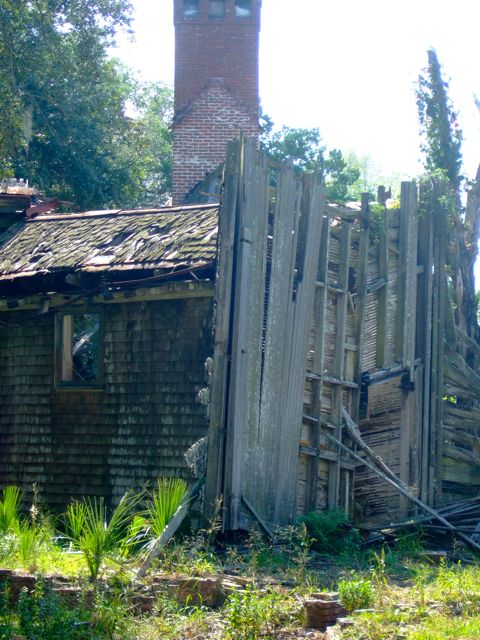
Cottage ruins, Cumberland Island, Georgia

Disaster-proof!

I taught creative writing to high school students for more than twenty years. Talk about potential for disaster—a room full of teenagers let loose to “critique” each other’s writing! We had to have guidelines, and I believe they apply as well to adults in a similar situation. So here goes:

  • Read the piece once, all the way through, without stopping to ponder too much or make notes. Then read it again, more closely this time, paying attention to what works and what doesn’t. Consider the elements of craft (I’m thinking fiction here)—plot, characterization, language, setting, opening/ending, etc.—particularly anything the writer has expressed concern about.
  • Always, always start by commenting on strengths: identify what the writer has done well. No generalizations allowed: no “I really liked it,” or “I think it’s good,” or “Great job!” Those statements may be true; you may feel them, but they don’t help the writer in concrete ways. Say specifically what you thought worked well and why: “The dialogue sounds real; I could hear those characters speaking.” “I was intrigued by the plot turn when  . . . [something happened].” “Your setting details really establish the mood of the story.”
  • Make your constructive comments specific. Notice I don’t say critical comments, but constructive, which means, hopefully, that the comments will be useful to the writer. Try couching your negatives as questions or “I” statements: “Could you clarify what happens here?” instead of “That’s so confusing.” Or “I didn’t understand the time shift when . . .” instead of “Wow, you really lost me!” or even worse, “This makes absolutely no sense!”

Tough Story-Love

Some of you may consider this a “touchy-feely” approach to critique. I’m not saying you can’t offer tough love for a story. It’s what most of us need. If all we want is vapid praise, we aren’t really serious about this writing business, and we aren’t willing to do the work necessary to succeed. But being a good reader also requires skill, hard work, and thoughtfulness. It’s a gift you offer to another writer.

Remember: as a reader of someone else’s priceless work, be respectful, be honest, be specific, be constructive! 

Tomorrow, I’ll address the other side of the critique desk (or more likely, these days, the computer screen). How should the writer receive feedback? Stay tuned. 

Meanwhile, please leave a comment about your own experiences as a reader of others’ work or as a recipient of “feedback.” Or leave a reader-tip to add to the above! I’d love to hear from you.