Walking through Fires

Meet Leona Pinson — “that girl” in That Pinson Girl, my debut novel — who at seventeen gives birth to an illegitimate child. Leona has completed the eighth grade, the only education available to her deep in the beautiful but hardscrabble hills of north Mississippi. Leona lives on a farm with her troubled mother, Rose, her aunt, Sally Pinson (a dwarf whose appearance has always frightened Leona), and her older brother, Raymond, who drinks and rides at night with other young men who feature themselves the “new” Klan. The year before her child is born, Leona’s father died in a hunting accident she believes may have been murder.

Leona is smart and resourceful, but vulnerable. Lying with that boy before he goes off to the war in France and refusing to name him as her son’s father invite the scorn of her family and the community, except for Luther Biggs, a biracial sharecropper who has a long history with the Pinson family. Luther loves and protects Leona, but he too keeps a devastating secret.
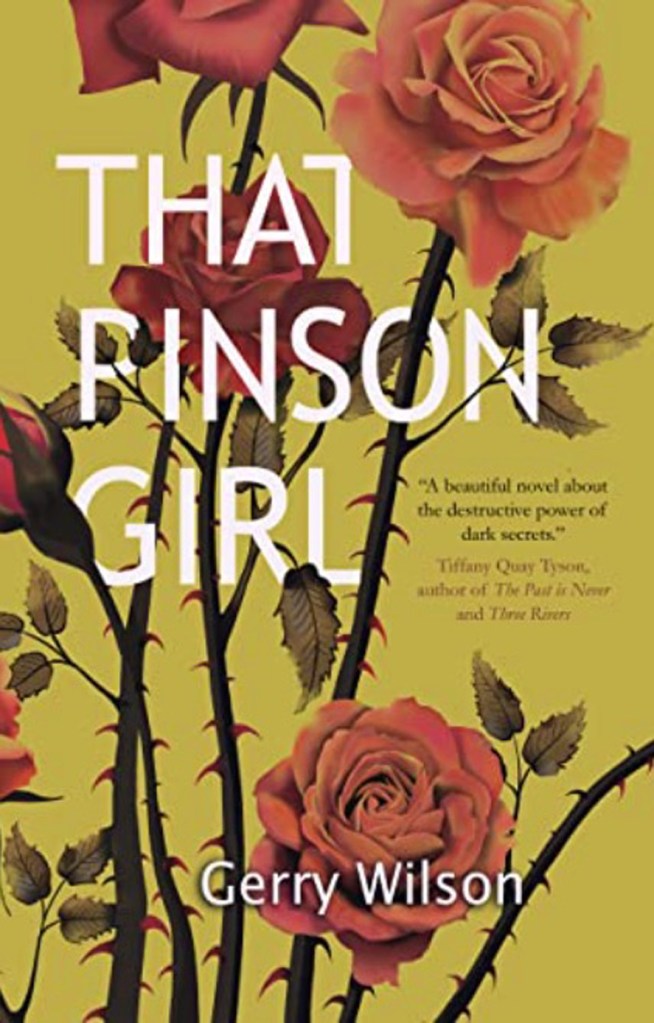
Pre-order That Pinson Girl from your favorite book store.

Early on, the problematic side of Leona as a character seemed to be that she was a victim of her life circumstances. Nobody wants a passive main character! But as she developed over the course of re-writing the novel many times, I discovered she wasn’t a victim at all, subject to the whims of others and whatever Fate might have in store. She evolved, and eventually, I found depth and resilience and courage in her that surprised me. You see, when Leona encounters hardships — when she walks through the fires of discrimination, hatred, violence, and loss — she suffers, but she picks herself up and gets on with the life she knows, all the while yearning for something better, all the while becoming stronger.

Where does the character of Leona come from?

In part, at least, she comes from me. My own life is probably my deepest source, whether I’m aware of its influences when I’m writing or not. Leona also comes from stories my maternal grandmother told. Her early life was a textbook for living with hardship and loss.

But Leona also comes from this:

When I was a child, a woman lived with her son and her mother in a shabby house down the street from us. It seemed nobody ever visited or called or spoke to them. They went about their lives in isolation. When I asked my parents about them, I got non-answers. I was almost grown when I learned she had borne the son out of wedlock when she was just a girl, and all of them were shunned because of it.

And there you have it: the birth of Leona Pinson as a character. I’m grateful to know her and share her with you.

#

A different version of this piece appeared September 8, 2023, on Substack at Stories I’m Old Enough to Tell. I’m in the process of transitioning this website blog to Substack. I would love it if you would subscribe there (it’s free!) and share with friends.

On Substack . . .

Hello, friends.

There’s a new edition of my Substack newsletter, “Stories I’m Old Enough to Tell.” This one, “Walking through Fires,” introduces you to Leona Pinson, the main character in That Pinson Girl (forthcoming February 6, 2024).

I hope you’ll go over and read—OR listen! I’ve introduced audio on this post and loved doing it, although I do sound really Southern!

Own the Emotion, Then Give It Away

Back in April, I volunteered as a studio monitor during the Southeast Regional Ballet Association’s festival here in Jackson, where some 800 ballet students and teachers gathered for three days of dance classes and evening performances. My sixteen-year-old granddaughter’s local dance company, Mississippi Metropolitan Ballet, hosted SERBA—a huge undertaking—and I wanted to help out. I also knew I would enjoy watching the dancers in class, so my motivation was partly selfish.

My duties? Introduce myself to the master teacher and the pianist, make sure the right dancers were in that studio, fetch whatever was needed, call for help if a dancer was injured, wipe down the barres after class. I knew what to do, but I didn’t expect the master teacher’s most important insight.

I’ve watched my granddaughter’s developing talent, hard work, and dedication over the years, so I wasn’t surprised at the young dancers’ talent and intensity. Some of them had arrived in the room by the time I got there, nearly 30 minutes before class began, and were already warming up. I sensed their nervousness; I was nervous, too, and worried that the teacher might be harsh or demanding. That couldn’t have been farther from the truth. I watched as he put the dancers through their paces, pushed, corrected, encouraged, and praised them.

Tutu, up close; a kind of artistry in itself
Tutu with hand-sewn ribbons

And then, toward the end of the first class, he said something remarkable: Technique, he said, isn’t enough. You can be technically proficient, but without emotion, you’ll never be a true artist. Repeatedly, he urged them to feel the music, to make their entire bodies expressions of emotion.

Artistry on the page

The same is true of writing. Artistry on the page isn’t about skill alone or even about eloquent writing. We can study and master craft; we can have a gift for language and story-telling; but if we can’t create emotion in ways that compel readers to feel, the prose will be flat, no matter how well written.

I learned a long time ago that my best work comes from an emotional place deep inside me where, quite often, I’d rather not go. When I become aware that a story isn’t working, I have to look at what I’m holding back.

One of the first stories I ever wrote and published (“Appendix,” published in the wonderful but now defunct Crescent Review) gave me a lot of trouble as I tried to write it. It dealt with betrayal, a subject that should have been fraught with emotion, yet no matter how I tried, I knew it wasn’t working. My husband gave me great advice: Step back from it, he said; change the POV, and give those emotions to somebody who’s the opposite of you.

I tried what he suggested, and the story came pouring out of me. And yet, even though I’d successfully created distance, I’d go upstairs after spending hours at the computer late at night (I was teaching full time then; that was when I had time to write), lock myself in the bathroom, and sob.

I’m not saying that tapping that kind of painful experience is necessary for every story, nor is probing personal experience right for every writer. For example, if writing about an experience brings back too many raw, painful feelings, give it more time before you tackle transferring that emotion to a fictional character. There may very well be some places you can never go in your fiction.

Going the distance

But my husband’s advice holds true. Take what terrifies you or makes you angry or sad or jealous and pour that emotion into a character who isn’t you. I read somewhere once that a fictional character will always be the writer in some way, whether we intend it or not. I believe that’s true. But if you’re dealing with difficult feelings, gain some distance. Give them away to someone very different from you, or turn the circumstances on their pretty little heads and write.

So, as with any art—dance or music or visual art or photography—writing techniques and skills must be mastered. We have to learn the rules before we can successfully break them. So we learn the craft. There’s no end to that, is there? We’re always learning! And then we reach inside and pull out our own hearts and examine them in the harsh light of day. We mine our experiences for feelings, and we make of them gifts for our readers.

How do you shape your characters’ emotions? Where do they come from?