When Life Gets in the Way

The first week of June, on the fourth day of a beach vacation in Fort Morgan, Alabama, my husband and I walked down to the beach after dinner to watch the sun set. My son’s family was there; it’s become a tradition to gather at the beach with them every summer. That evening, I walked out of our shade tent to take a look at the sand castle my grandson was building, stepped in a hole in the sand, and went down. Hard.

From that point I remember only bits and pieces—a blessing, I’ve been told—but I do remember the EMTs putting me on a backboard they had trouble latching in the sand and loading me into the bed of a red pickup truck with “RESCUE” emblazoned on the doors (the ambulance couldn’t navigate the beach). I remember the guy in the back of the truck with me yelling “Go go go!”, urging the driver on over the rough terrain.
I had surgery in Foley, Alabama, and my husband and son drove me home to Jackson, Mississippi a few days later. I spent three weeks in a rehab facility. I’m now almost four months out from the fall and the surgery and doing well.

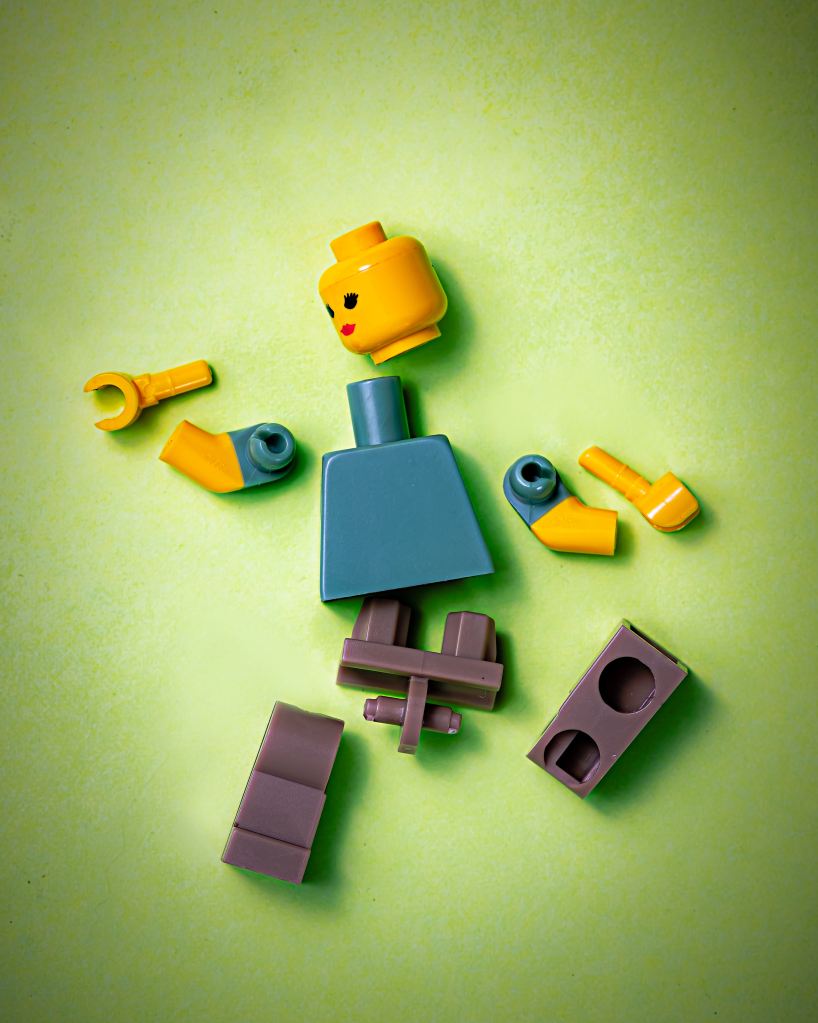
But what about the time I “lost” to a fog of pain and meds and physical therapy and learning to function again? If you’ve had a similar experience, you know that getting well becomes all-consuming. The momentum I’d had before the accident—preparing to launch my novel, starting a Substack newsletter, expanding my social media presence, and more—was gone.

This is where the old saw, “life gets in the way,” comes in. After something that shakes us, how do we reclaim our momentum? How do we rebuild confidence? How do we pick up where we left off—or even better, how do we take the earth-shattering experience and create something good and maybe even beautiful from it?

I don’t have many answers, but I will say this: like regaining strength, we get back a little bit at a time. We allow whatever emotions we have to play out. I’ve cried plenty over those lost days, but that won’t bring them back. I’ve begun to write again (this little essay is part of that effort). I’ve gotten back to revising stories for a collection. There’s a 40,000-word draft of a sequel to my forthcoming novel, That Pinson Girl, nagging me for attention. I haven’t written anything new yet, but I hope that will come, in time. Time’s the great healer, people keep telling me. I hope so!

What about you? Has life thrown you a curve ball lately? How did you adapt? What tips do you have to offer? I would love to hear from you in the comments.

Photo by Jackson Simmer on Unsplash

This piece was originally published at Story Circle Network, October 4, 2023.

Own the Emotion, Give It Away

Some years ago, I volunteered as a studio monitor during a regional ballet association festival. I watched nervously as the teacher pushed and corrected the young dancers, but I was happy to see how he also encouraged and praised. Toward the end of the session, he told the dancers something I’ve never forgotten: Technique isn’t enoughYou can be technically proficient, but without emotion, you’ll never be a true artist. He urged them to feel the music, to make their entire bodies expressions of emotion.

Credit: Samantha Hurley at Burst

I believe the same is true of writing. Artistry on the page isn’t only about skill or eloquence. We study and master craft; we may have a gift for language and storytelling; but if we can’t re-create emotion in ways that allow readers to feel, the prose will most likely be flat, no matter how well it’s written.

I learned a long time ago that my best work comes from an emotional place where I often would rather not be. So, when I become aware that a story isn’t working, I look hard for what I’m holding back.

There may be places we can never go in our fiction. I read once, though, that in one way or another, a fictional character will always be the writer.

One of the first stories I ever published gave me fits while I was writing it. The story dealt with betrayal, an experience I knew firsthand. Writing about that trauma was fraught with deep emotion, and yet I struggled to portray the feelings on the page in a way that didn’t feel stiff and superficial. A wise reader told me I was too close to the story; the protagonist was too much me. I needed to find a way to step back and give those emotions away. I was aware of the autobiographical elements, but I hadn’t realized how they were confining me. Instead of asking “What if…” I was locked into “This happened.” Once I changed the point of view, the story came pouring out. During the week it took to get the draft onto the page, I went upstairs every night after I stopped working, locked myself in the bathroom, and turned on the shower so my children couldn’t hear me crying.

Tapping painful experiences isn’t necessary for every story, and probing our personal stories isn’t right for every writer. There may be places we can never go in our fiction. I read once, though, that in one way or another, a fictional character will always be the writer, whether we intend it or not. It’s important that if we’re dealing with difficult feelings, we create distance. If we can manage that, if we can step back and at the same time go deep and open our hearts in the harsh light of the page, if we can mine our feelings that way, then the emotions that weigh us down can become genuine gifts of connection with our readers.

###

This post appeared on Telling Her Stories at Story Circle Network on October 21, 2022.

Crossroads

crosstiesb:w
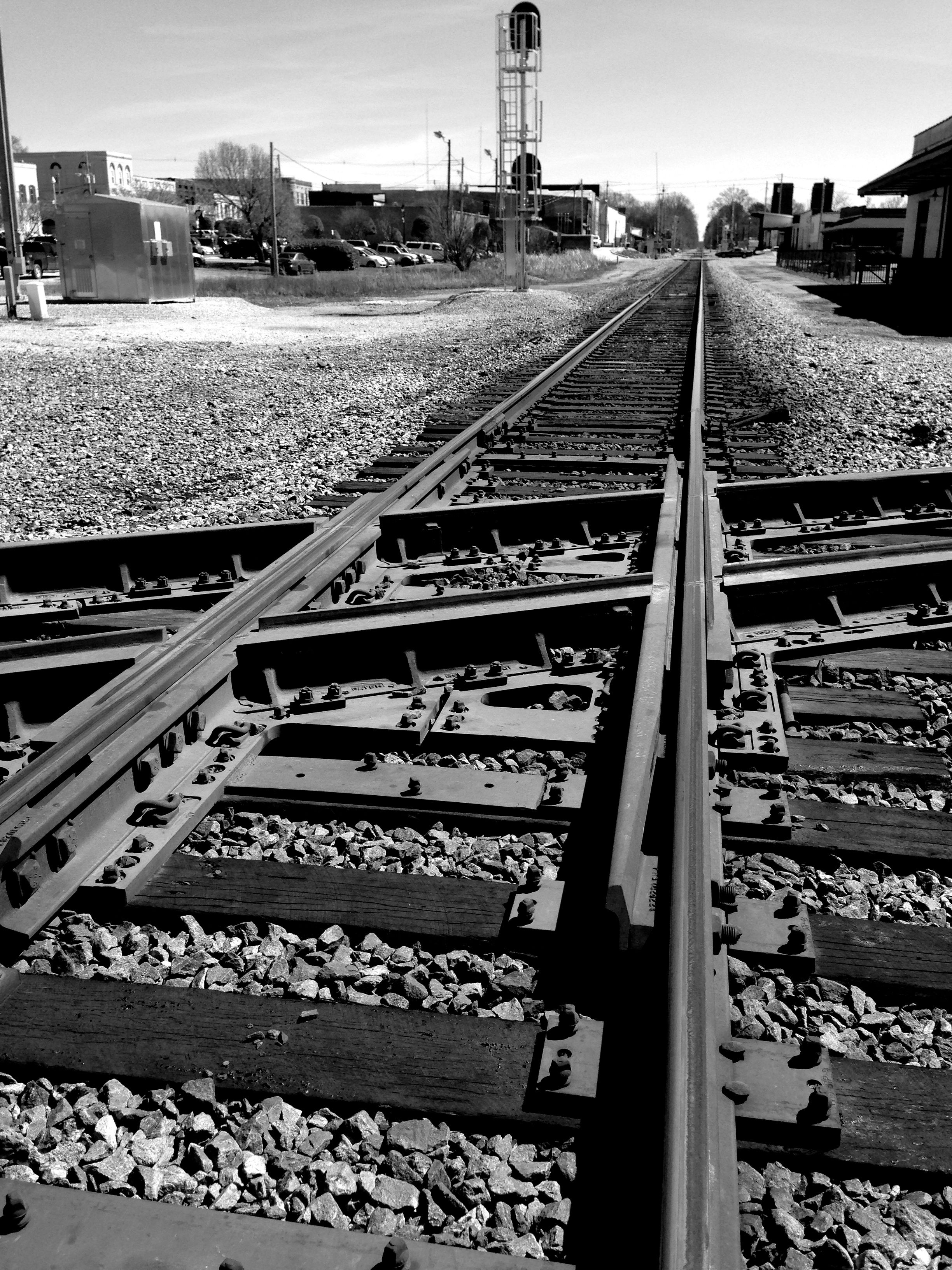
Crossroads, Corinth, Mississippi / Gerry Wilson

Last spring, I attended a family reunion, a gathering of distant cousins who were mostly strangers, all linked to my great-great-grandfather who settled in middle Tennessee in the early 1800s. We cousins are a diverse group–all ages, many different professions, some with strong genealogy interests and knowledge and some, like me, more or less novices. I am an only child. Until the last few years, when these cousins surfaced, I’d felt isolated and wished for a big, extended family. Now I have one. We swapped a lot of stories that day.

For the reunion, my husband and I stayed in Corinth, Mississippi, the nearest town of any size to Selmer, Tennessee, where my father’s family roots are.  We visited the Civil War Museum in Corinth, a museum that doesn’t glorify the war but portrays its heartbreak and deprivation. We also discovered the little railroad museum built beside the tracks that, as in so many little towns, run right through the heart of things.

The rails in the photograph mark where the east-west and north-south railroads crossed–a significant crossroads for both North and South, thus the battles nearby for the control of that area. Those railroads and the nearby Tennessee River were major conduits for goods and soldiers.

At the war’s end, my great-grandfather reached a crossroads of his own. His oldest son had been killed at the Battle of Corinth. (My father was named for that soldier.) A younger son was arrested for passing himself off as a Confederate soldier and commandeering a horse and a mule. My great-grandfather posted bond for him, using his land as collateral, and when his son failed to show up in court at the appointed time, my great-grandfather went on the run, too, taking his family, including the wayward son, with him.

I imagine him rushing into the house, the door banging shut behind him, telling his wife to hurry, throwing things into the wagon–a feather bed, a chicken crate, pots and pans, maybe my great-grandmother’s travel trunk she refused to part with–settling in the children, and setting off into the night. Leaving much behind: house, land, family, friends, debts, a dead son. They moved to Mississippi, and that’s where they stayed. My grandfather, the youngest child, was six years old.

Colorful stuff, this. The stuff of story.

Think about your parents’ or grandparents’ crossroads. Whose choices have shaped your life?