When Life Gets in the Way

The first week of June, on the fourth day of a beach vacation in Fort Morgan, Alabama, my husband and I walked down to the beach after dinner to watch the sun set. My son’s family was there; it’s become a tradition to gather at the beach with them every summer. That evening, I walked out of our shade tent to take a look at the sand castle my grandson was building, stepped in a hole in the sand, and went down. Hard.

From that point I remember only bits and pieces—a blessing, I’ve been told—but I do remember the EMTs putting me on a backboard they had trouble latching in the sand and loading me into the bed of a red pickup truck with “RESCUE” emblazoned on the doors (the ambulance couldn’t navigate the beach). I remember the guy in the back of the truck with me yelling “Go go go!”, urging the driver on over the rough terrain.
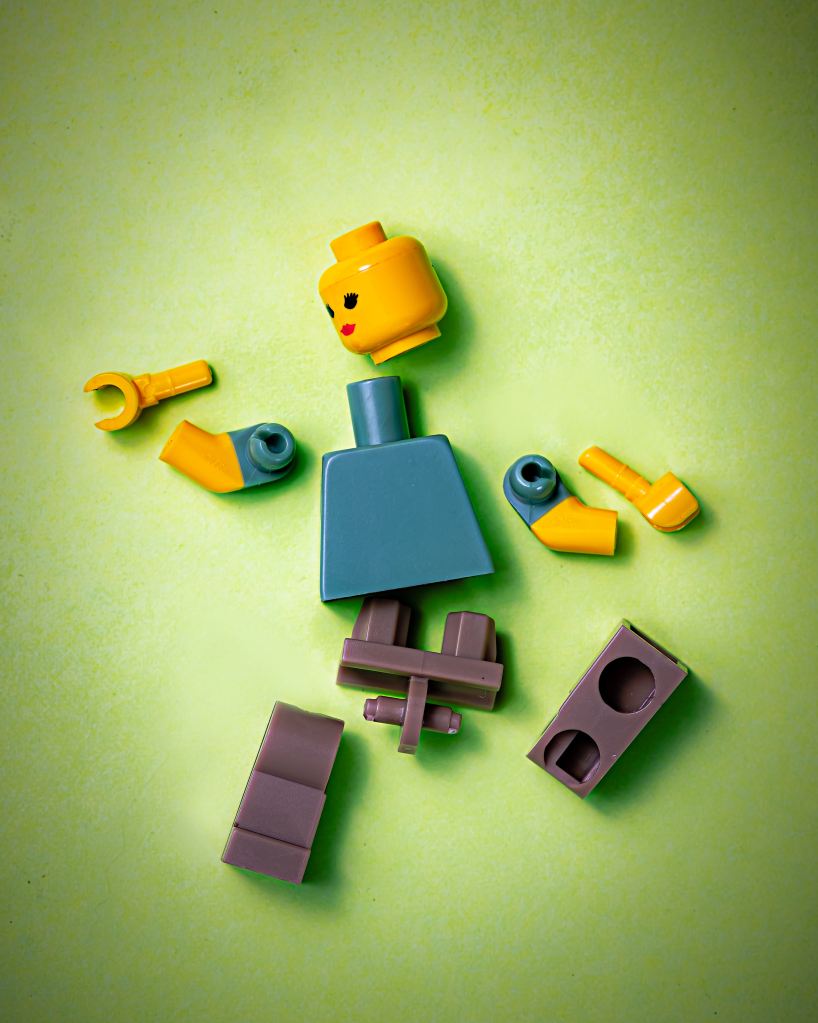
I had surgery in Foley, Alabama, and my husband and son drove me home to Jackson, Mississippi a few days later. I spent three weeks in a rehab facility. I’m now almost four months out from the fall and the surgery and doing well.

But what about the time I “lost” to a fog of pain and meds and physical therapy and learning to function again? If you’ve had a similar experience, you know that getting well becomes all-consuming. The momentum I’d had before the accident—preparing to launch my novel, starting a Substack newsletter, expanding my social media presence, and more—was gone.

This is where the old saw, “life gets in the way,” comes in. After something that shakes us, how do we reclaim our momentum? How do we rebuild confidence? How do we pick up where we left off—or even better, how do we take the earth-shattering experience and create something good and maybe even beautiful from it?

I don’t have many answers, but I will say this: like regaining strength, we get back a little bit at a time. We allow whatever emotions we have to play out. I’ve cried plenty over those lost days, but that won’t bring them back. I’ve begun to write again (this little essay is part of that effort). I’ve gotten back to revising stories for a collection. There’s a 40,000-word draft of a sequel to my forthcoming novel, That Pinson Girl, nagging me for attention. I haven’t written anything new yet, but I hope that will come, in time. Time’s the great healer, people keep telling me. I hope so!

What about you? Has life thrown you a curve ball lately? How did you adapt? What tips do you have to offer? I would love to hear from you in the comments.

Photo by Jackson Simmer on Unsplash

This piece was originally published at Story Circle Network, October 4, 2023.

We Don’t Have to Know Everything

What do you do with someone who won’t behave?

This person is secretive, aloof, moody. She’s keeping me up nights and interfering with my novel-in- progress. She’s the character who “vants to be alone!”

Her name is Robin. She’s a twin. An accomplished photographer. She has dark hair and green eyes, she’s twenty pounds overweight, she’s married with two sons. Her marriage is in trouble. Her twin sister has died, and she carries a terrible secret.

All these complications in her life, and yet, even after excellent feedback at a workshop, I remain stumped by what Robin desires and what will keep her from getting it.

Photo: Andrew Seaman on Unsplash

So I start over at the beginning, revising as the story seems to lead me. I try applying a rubric the workshop leader shared. It’s a good tool to get a handle on what a story is about (can you say it in a sentence?), determine what the “container” is (time frame and place), and sketch out the main characters and plot points. The rubric helps, but I’m not there yet. I’m still worried about not knowing clearly who Robin is and where she’s going.

I have to confess I’ve never been big on plot points, but I’m learning. I tend to let the story evolve, which means I may do more work than someone who is able to plan the story (or book) out, start to finish. Sometimes, because of my tendency to “pantser” rather than plot, I feel inept as a writer.

Many writing experts contend that we should know everything we possibly can about a character before we begin. But a fine teacher of writing and an exceptional fiction writer in his own right, David Jauss, takes the stance that we don’t have to know everything. In fact, Jauss says it may be preferable not to know; not knowing every detail ahead of time may lead to richer character-ization as we discover things about characters as we write them.

What a relief!

What Jauss says doesn’t absolve me of all responsibility where the story is concerned. I can’t put the writing on automatic pilot. (Wouldn’t it be interesting if we could? But I don’t trust the recent developments in AI to do the job.) But Jauss’s take allows me the freedom to write about this character and her circumstances, to write into her, and see what unfolds. Maybe I’ll discover along with her how she ticks, where she’s headed, and how she’ll get there.

So here we go, my make-believe friend, Robin. Let’s see where the words on the page take both of us.

How do you handle your less-than-cooperative characters? Are you a “know everything” writer or one who goes with the flow?

Open the Doors. Walk Right In!

We talked recently about the importance of ridding a story of whatever isn’t absolutely necessary and/or doesn’t advance the story. This “excess” can be anything from losing a line of description to cutting out a character. Or a scene. In the case of novels, entire chapters.

But once we’ve reduced a story to its bare bones, what’s next?

We look for opportunities.

A few years ago, in a fiction workshop at The Lighthouse Lit Fest in Denver, I had the opportunity to sit down with an author I admired to talk about the opening pages of my novel. That hour was golden, but it was also hard. What I’d thought was a pretty good start had lots of growing to do.

Image: Jan Tenneberg, Unsplash

Most of his comments—scrawled in the margins beside a line or two of underlined text—said simply “Open this door.” He talked about being alert to a range of possibilities to go deeper into a character’s psyche, to make description more visual and significant to the story, to open up the plot in a different direction.  

How was it he could see those things when I had not? I’ve decided it’s a skill that comes with practice.

As you read through a draft (preferably aloud), be open to possibilities. Be aware of anything that needles you, of passages that feel somehow incomplete or “off,” of words or phrases that nag you. In my experience, sometimes there’s only a vague uneasiness; I can’t say right away “what’s wrong.” It can feel so urgent to “finish” and get a story out into the world that it’s easy to ignore these signs. Chances are, they won’t go away on their own. And the story won’t fix itself.

Here’s an example of what I mean by opening doors, taken from a story I’m still working on, “Fast”:

Paul witnessed his father’s hard life as the pastor of two, sometimes three rural churches at a time. His shortest tenure while Paul was growing up was two years, the longest ten; a cycle that repeated throughout his father’s life.

Became this:

Whenever someone asks how he came to be a minister, Paul likes to say he was called. It’s what his father said, and Paul believed it. Why else would a man choose to serve two, sometimes three poor, rural congregations at once, moving every few years to a different set of churches, a different set of people and problems? Paul witnessed the toll it took—never enough energy or time to go around, never enough money. Paul was eighteen and about to leave for college when his father told him he had one piece of advice. He swept his arm around the shabby office in one of those rural churches. “Whatever you do, don’t do this,” he said.

What’s the difference—beyond more words?

What works for you when it comes to “fleshing out” stories? I would love to see your comments.

[This post originally appeared at Story Circle Network, February 10, 2023.]