Through the Woods and All That

When my husband and I went out this afternoon to run some errands, we realized we needed gas in the car. In the Kroger parking lot, cars were backed up and jockeying for spots at the pumps. My husband pulled around a line of cars to wait in another line, but when the truck at the nearest pump left, he backed into that spot. Yes. He did that. A woman in a black Mercedes came speeding over with a kind of I-was-here-first aggression. She stopped as close to our car as she could, front bumper to front bumper, as though she dared anybody else to get ahead of her. I busied myself with my phone and didn’t look up. I didn’t want to make eye contact, but I was ready, if she got out and came over, to plead that we are old, please, please let us get to the gas pumps. But she backed out and drove off in a huff. We got our gas and left.

through the woods and all that

My husband and I talked about it later: all those people in a hurry, getting ready to travel somewhere for Thanksgiving, over the river and through the woods and all that. To friends’ or relatives’ houses, or even home, wherever that might be. He used the term “home place,” and my mind went immediately to the weathered wood-frame house beside the highway north of my home town, the house my dad grew up in, the house long since gone. When I was growing up, my family called it the old home place. The place called home. I have no memory of going inside that house; those grandparents died when I was a toddler. But when I heard home place today, that image was the first that came to me.

I don’t have a home place anymore in the sense of a place I can go back to. This house where we are, my husband and the cat and me, is home. My adult children will never think of this house as home, though. They grew up mostly in another house, a big, two-story house on a hill across town. Our family moved around a good bit when the children were small, but I think that other house would be the one they’d all say they remember as home because it’s the place each of them left behind when they grew up. When it was time.
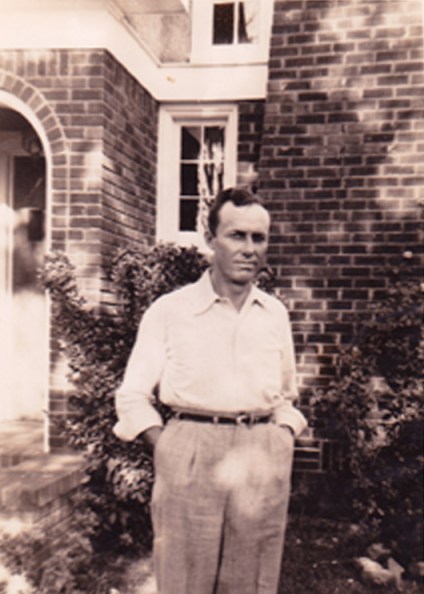
My dad, my home place

My dad, my home place

my growing-up home

From the time I was an infant until I went to college, my family lived in the same house. My parents moved after I was grown and married, but their new house never felt like home to me. It was nicer, but that didn’t matter. My home place was the little brick house on Columbia Street. I could draw you a floor plan. I could describe the damp basement and the added-on sun porch and the floor furnace in the hall, I could tell you where the pear tree was and the willows and the muscadine vines and the ramshackle garage and my grandmother’s rose beds. I could draw you two floor plans, actually: one of that house the way it was until I was ten or so, and one after that, when my mother gutted it of its pretty French doors and its arches and made it all beige and modern and cold.

Somebody else lives there now. I haven’t driven by it in a while, but when I do, it looks incredibly small. The town seems small, too, as though it and everything in it have shrunk over the years. Over time and distance.

and so: Thanksgiving

Tomorrow, we’ll go to my oldest son’s house for Thanksgiving. He and his family live nearby, so we don’t have far to travel. We’ll be there with his in-laws and my grandchildren, but we’ll be fragmented; my other sons and their families won’t be there. Nor will my husband’s children and grandchildren. But I’ll take my oldest son’s favorite cornbread dressing, the one he remembers my mother and my grandmother making. The one I’ve made just about every Thanksgiving and Christmas for, well, I won’t tell you how many years. The one he wants his daughter, my oldest granddaughter, to learn to make. A tradition.

After the meal, when everybody is sated almost to the point of sleep, my husband and I will head home. We’ll watch a little football. We’ll call the other children and grandchildren. But in my mind, in my heart, I’ll be remembering. I’ll be grateful for home places, here and there, now and then. For ghosts of places. I’ll be grateful for people, too, for all who were once part of my life and are now gone; for all who are here, now; and for all who are yet to come, who someday will look back towards home, wherever that may be, and remember.

What’s the first place that comes to mind when you hear the word “home”?

Listening Back

I haven’t been able to get these words out of my head today:

We cannot live our lives constantly looking back, listening back, lest we be turned to pillars of longing and regret, but to live without listening at all is to live deaf to the fullness of the music.  — Frederick Buechner, The Sacred Journey

My Wordsmith Studio friend, Lara Britt, keeps encouraging me to write memoir.

“But I write fiction,” I tell her; “I don’t write memoir.”

Oh sure, I’ve written some pieces for this blog, mostly in the context of exploring memory in relationship to story. Or at least that’s what I’ve told myself. I have to confess, though, that I found it cleansing to “get them out,” those stories, some of them like a painful tooth; it felt good for them to be gone, no longer cooped up inside my head. But a memoir, a cohesive story of my life? No, I don’t think I have the material. Or the nerve. Because it takes courage to remember.

no such thing as perfection

I used to think I’d had a nearly perfect childhood. Nobody beat me. I didn’t grow up poor. I didn’t grow up rich. But I was an only, overprotected child in a household where the grown-up dynamics were complicated, so not so perfect, after all. Idealistic and immature, I did what I was expected to do: got a teacher’s license so I could “take care of myself” if the need arose, married a good boy with “promise,” settled down and had babies and and generally lived what I thought would always be the good life. How can I get stories out of that?

Well, life doesn’t always turn out that way, does it? And that’s where remembering gets hard.

looking back, listening back

I understand Buechner’s “looking back” as an easy metaphor for examining the past. When we look back, we either boldly turn and face the past head on or we glance over our shoulders so memory comes at us a little sideways, a little slant of the truth. Either way, we see visions of how things used to be. Sometimes they’re lovely; sometimes, nightmarish.

My dad's radio / Gerry Wilson

My dad’s radio / Gerry Wilson

But how do we “listen” back? Maybe Buechner means the way we play old “tapes” in our heads: the reruns, the should-haves, the voices, the patterns of thought that occupy our minds and keep us spinning helplessly in one place, not moving ahead but not able to go back, either, which of course we can’t do; we can never, ever go back, not to the previous minute or hour or day, not really, except through the filter of memory.

Too much dwelling on the past and we risk turning into “pillars of longing and regret,” Buechner says. Soured on life. Stuck. Sad. Lost.

deaf to the fullness

But then Buechner makes the turn, important in a poem but also in any good story: “to live without listening at all is to live deaf to the fullness of the music” [emphasis mine]. To shut off remembering is to miss out. Shutting off the past makes us less than what we can be and keeps us from living fully now.

So maybe my friend is right. Maybe all our remembered stories, no matter how simple they seem on the surface, deserve to tell their noisy little selves: to shout out, to sing off-key, to be messy and loud, heartbreaking and beautiful at once. Just like our lives.

Nobody wants to “live deaf to the music.” How do you confront—or embrace—your past?

Close Encounter in the P.O.: Two Soldiers

I want to tell you a true story.

At the P. O.

This morning, I stood in line for a long time in our neighborhood post office. As usual, there was only one person working–a woman who, in spite of the line, seemed determined to keep her wits about her by not hurrying. So I did some people-watching. That’s what writers do, right?

A young African American man wearing camouflage stood just in front of me. He was clearly a soldier—muscular build, clean-cut, his head shaved—and when he turned, I saw his clear, beautiful dark eyes. In front of him, a couple of suspicious looking white guys waited. One wore a baseball cap over his dirty hair (he was sending a money order, it turned out, for $57 and some cents); and the other, with his unkempt beard and beady eyes, looking like a character out of Deliverance, struggled with a box so big he had to rest it now and then on the Priority Boxes kiosk next to us.

The line grew behind me, too. I couldn’t help noticing a scruffy, bearded, older white guy when he came in. He wore a prosthetic leg and a sour expression. In pain? I wondered. Deliverance guy turned and stared pointedly at the prosthetic leg (the older man was wearing shorts).

Finally, the line moved, and the soldier in front of me was next. He had been working on a package at the kiosk, and apparently, he’d stuffed something too large into the envelope. It bulged and gapped open at the ends. The postal clerk told him he’d have to tape it up. “I don’t have any tape,” she said, nodding toward the tape for sale.

“What about that tape right over there?” the soldier asked. He was right; there was tape, in clear view on the counter.

“I can only let you have tape if you’re sending it Priority,” the clerk said. The soldier nodded, and she handed him the roll. He taped up his package, paid, and turned to go.

Encounter

Soldier Cloth by lobster 20 Image courtesy of www.freedigitalphotos.net
Soldier Cloth by lobster 20
Image courtesy of http://www.freedigitalphotos.net

As he walked out, the scruffy older man behind me said, “Soldier!” His tone sharp, commanding. I turned. Oh Lord, I thought, not a confrontation.

The young soldier turned, too, and looked at the man.

“Vietnam vet,” the older guy said, as though that was all the explanation needed. “You been in it over there?”

“Yes sir,” the soldier answered, his tone like a salute. “Twice now.”

The Vietnam vet reached across the space between them and offered the younger soldier his hand. “I want to thank you for what you do for all of us,” the old vet said. They shook hands, black man and white, two soldiers standing on common ground in our little post office. The moment was entirely theirs. Choked up, I looked away.

The young soldier went on his way, and by that time, I was at the window, tending to my mundane errand but knowing I had just witnessed something remarkable.

Some Donald Maass Wisdom

Earlier this morning, I had read Donald Maass’s column, “Seasons of the Self,” at Writer Unboxed. First, Maass reflects on his personal past, his present, his future. Then he turns the reflection to the art of writing fictional characters. Every protagonist, he says, must possess personal awareness–a clear sense of where he’s been, where he is, and where he’s going. Here’s Maass:

How does your protagonist understand his or her own evolution? Powerful characters are real people. To become fully real we need to create their personal history.

He goes on to list ways to give protagonists the sense of self that renders them human. This is good stuff; I’d say go read it right now.

Witness

So what does the Maass article have to do with what I witnessed this morning? Just this: I was struck by the fact that each of the soldiers in the post office has his own story: a past self, a present, a future. Their stories crossed in that moment, unforgettable, I would think, for either of them, or for me. I just happened to be there; ten minutes earlier or later, a shorter wait, and I would have missed it. I could invent a story now about either of them, based on what I observed. I have all I need. Whether I will or not, I don’t know. For now, it’s enough to have been there.

A challenge for you!

First, read the Maass article. Then think about the protagonist in your current work-in-progress. How does his/her story interact with the stories of others? How does such a moment of encounter impact his/her self-knowledge? Write a “fresh” encounter your character has that reveals something about his or her sense of personal history.

Or, think about your personal story in this light: How has a moment of encounter changed you? Write about it!