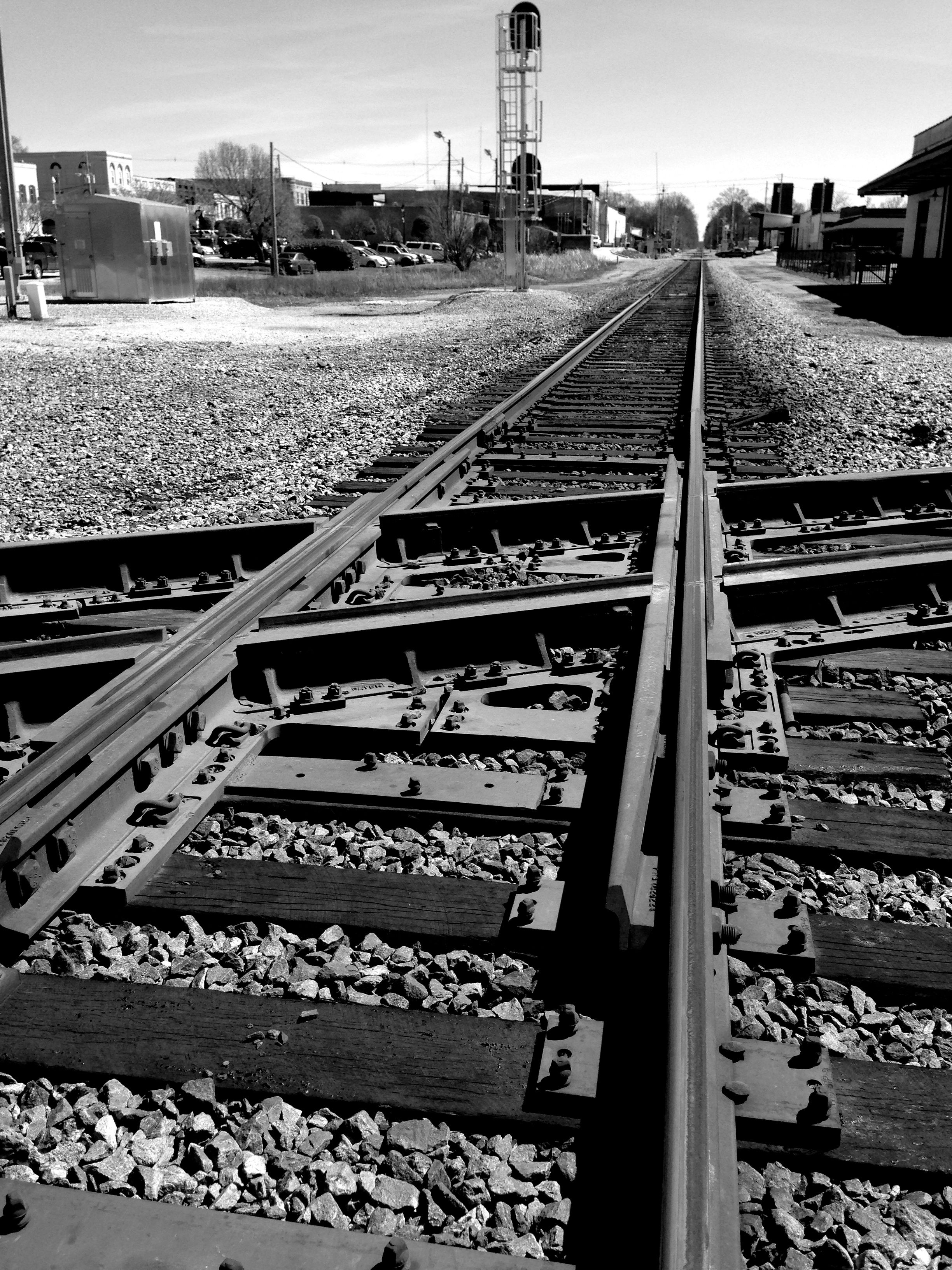
Crossroads

crosstiesb:w
Crossroads, Corinth, Mississippi / Gerry Wilson

Last spring, I attended a family reunion, a gathering of distant cousins who were mostly strangers, all linked to my great-great-grandfather who settled in middle Tennessee in the early 1800s. We cousins are a diverse group–all ages, many different professions, some with strong genealogy interests and knowledge and some, like me, more or less novices. I am an only child. Until the last few years, when these cousins surfaced, I’d felt isolated and wished for a big, extended family. Now I have one. We swapped a lot of stories that day.

For the reunion, my husband and I stayed in Corinth, Mississippi, the nearest town of any size to Selmer, Tennessee, where my father’s family roots are.  We visited the Civil War Museum in Corinth, a museum that doesn’t glorify the war but portrays its heartbreak and deprivation. We also discovered the little railroad museum built beside the tracks that, as in so many little towns, run right through the heart of things.

The rails in the photograph mark where the east-west and north-south railroads crossed–a significant crossroads for both North and South, thus the battles nearby for the control of that area. Those railroads and the nearby Tennessee River were major conduits for goods and soldiers.

At the war’s end, my great-grandfather reached a crossroads of his own. His oldest son had been killed at the Battle of Corinth. (My father was named for that soldier.) A younger son was arrested for passing himself off as a Confederate soldier and commandeering a horse and a mule. My great-grandfather posted bond for him, using his land as collateral, and when his son failed to show up in court at the appointed time, my great-grandfather went on the run, too, taking his family, including the wayward son, with him.

I imagine him rushing into the house, the door banging shut behind him, telling his wife to hurry, throwing things into the wagon–a feather bed, a chicken crate, pots and pans, maybe my great-grandmother’s travel trunk she refused to part with–settling in the children, and setting off into the night. Leaving much behind: house, land, family, friends, debts, a dead son. They moved to Mississippi, and that’s where they stayed. My grandfather, the youngest child, was six years old.

Colorful stuff, this. The stuff of story.

Think about your parents’ or grandparents’ crossroads. Whose choices have shaped your life?
Today or Tomorrow, Noon or Evening

Today, another assignment from Blogging 101: use a prompt from the Daily Post and make it my own. Here’s today’s prompt:

In Reason to Believe, Bruce Springsteen sings, “At the end of every hard-earned day / people find some reason to believe.” What’s your reason to believe?

Bruce tells it like it is.

By many people’s standards, my days are not “hard-earned.” I have a good life, not without its problems and sorrows, but relatively easy compared to some.

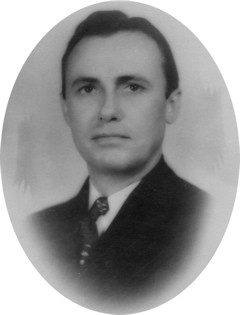
My dad’s days, on the other hand, were hard-earned. He came up poor, and after high school, he went to live with and work for my uncle, who had a car dealership in a nearby town. When my uncle decided to move back to Pontotoc, the tiny town in the hills of north Mississippi where they had grown up, my father moved with him. In those days, Daddy  followed the big bands that traveled the South. He was quite handsome, and I have old photographs of the pretty girls he knew. But my mother put an end to what seemed to be his confirmed bachelorhood. When they married, she was eighteen and he was thirty-two, and the love affair that was their marriage continued until his death forty-five years later. For the rest of his life, he worked six days a week, from six in the morning until six at night, to provide for my mother and me. Maybe we were his reason to believe.

Do I believe in providence?

Daddy @ 1937

my father, about 1937

Yes, I suppose I do. I’m not certain how my parents met. I do know that my mother’s best friend lived across the street from the little service station my dad ran. I imagine her walking past the station, blushing, never looking his way. Did she and her friend watch him from the friend’s front porch? Did they giggle? Did she write her name as his–“Mrs. G______”?

I wish I knew the answers, but I don’t. What a shame I never asked.

I can only speculate, just like I can speculate about the coincidence of meeting my first husband at a college party. We were both there with other people, but he cut in and danced with me. Later, I ran into him on campus and he offered me a ride back to the dorm. Still later, he called and asked me out. And that was the beginning.

Or much later, some twenty-five years ago now, a phone call came from a man I didn’t know, the man who is now my husband. He needed a judge for a high school literary magazine contest; would I do it? When I said yes, he offered to bring the materials to my house. And soon, there he stood, on my doorstep, this man I would eventually marry. He says he remembers I served him iced tea (it was July, maybe August). What if I’d offered him coffee? Or lemonade? Or nothing? What if I’d said no on the phone? I so easily could have, but I didn’t.

Today or tomorrow, noon or evening.

This restaurant or that one. Why are we in particular places at particular times? Five minutes, or less, even seconds, and the turns our lives take could be so very different. Call it providence. Call it fate. Call it God-ordained. Our lives unfold in mysterious ways.

What is my reason to believe? My best answer is how can I not?

I’ve lived long enough to look back on the days of my life–some of which were indeed hard-earned, heartbreaking days that I thought at the time would surely break me–and see how they didn’t. They shaped and matured me and made me a different person from the one I might have been. That evidence is my reason to believe. No, I can’t prove it. But it sustains me, and that’s what matters.

Have you experienced a particular moment in your life when you felt something larger than yourself at work? I’d love for you to tell me about it here.


Reason to Believe

Great Expectations: Ten Things to Expect When You Launch Your Book

Welcome to the new world of this first-time author!

It’s a grand place to be, full of surprises and rare moments. The learning curve has been steep at times, but it’s oh-so-much fun.

Lemuria Books, Jackson, MS

Lemuria Books, Jackson, MS

After months of preparation and anticipation and, finally, these last two weeks of launching Crosscurrents and Other Stories, I want to share some observations about kicking your precious baby, your book, out into the world:

  • Expect to learn about marketing. Unless you publish with a major house, you’ll need to do much of your marketing and promotion on your own. (Yes, even with a terrific small press like mine–I say that word, mine, with great pride, Press 53.) You’ll research bookstores and review possibilities, make those contacts and introduce (sell) yourself and your book, set dates, send promo material, follow up, follow up, follow up. (Did I say follow up?)
  • Expect to get comfortable with self-promotion. If you don’t believe in your book, who else will?
  • Expect to choose what you’ll read at a signing (a real signing; imagine it) ahead of time, but have a backup plan so that, when you size up your audience (and realize the adultery story Just Won’t Do), you’ll have another option. Read your selections aloud and time them. Better to be too short than too long. Read scenes, not an entire chapter. If your book is a short story collection like mine, read scenes from two or three stories and stop each time at a powerful moment; leave your audience hanging so they’ll want more.
  • IMG_3973

    TurnRow Books, Greenwood, MS

    Expect the unexpected: The hem comes out of your pants. Your hair goes limp. Your ex shows up. Your best friend from childhood, whom you haven’t seen in ages, shows up, too. She’s the first person you see when you get out of the car in front of the bookstore and you fold into each others’ arms and hug and cry like the girls you used to be.

  • You’ll see people you haven’t seen in years. Expect not to remember the names of everybody you’ve ever met who might show up at a signing. It’s okay to ask. It’s also okay to say, “Now, you spell that with ie, not y, right?” Much better than getting it wrong. You’ll meet strangers. Treat them like friends.
  • At a moment when you least expect it, expect a lump in your throat when you’re reading, that rare moment when your own words move you and you know–you know–they’re good.
  • Expect the turnout, however small, to be great: these folks are your readers. Make them feel significant. Make their coming out to meet you feel worthwhile.
  • Expect to be disappointed: the turnout isn’t what you expected; the audience (if you’re lucky enough to have one) doesn’t laugh where you thought they would, or they laugh when you think they shouldn’t; you don’t sell many books. But you’re making contacts. You’re creating a network of bookstores, readers, and friends who’ll come back–next time.
  • IMG_3984

    Off Square Books, Oxford, MS

    Expect a remarkable level of generosity and hospitality on the part of independent book stores. They are gracious. book-loving folks; they want you to succeed.

  • Expect to be gracious back. Pass along the wealth of good will. Thank the bookstores for having you. Recommend them to others. Write notes or call or at least email your friends and thank them for coming. Go to other authors’ signings, like their Facebook posts and pages, and generally be a cheerleader for other authors’ voices whenever and wherever you can because now you know what it feels like to be a first-timer, which, I expect, is not so different after all from being a second-timer or a fourth or a  twenty-first. Because we are all after the same thing: we want our words to matter.

Other first-time authors out there: what was your most unexpected moment? Your proudest?